Dalam rangka menyambut Hari Ulang Tahun (HUT) Ke 80 Kemerdekaan Republik Indonesia Pemerintah Kabupaten Bengkulu Tengah menggelar kegiatan pembagian bendera Merah Putih secara gratis kepada masyarakat di malam Maroba (Mari Nongrong Bersama) di depan Kantor Bupati Bengkulu Tengah Desa Ujung Karang. Sabtu (09/08/2025).
Acara yang berlangsung meriah ini turut dihadiri tamu istimewa yakni Bupati Kabupaten Murung Raya Provinsi Kalimantan Tengah Perdie M. Yoseph beserta istri yang datang secara khusus untuk bersilaturahmi sekaligus mendukung semangat nasionalisme masyarakat Bengkulu Tengah dan juga untuk menikmati malam Berbinar Bengkulu Tengah.
Bupati Bengkulu Tengah Rachmat Riyanto menegaskan bahwa kegiatan ini bukan sekadar aksi pembagian biasa akan tetapi kita harus dapat mewujudkan motto HUT Ke 80 RI tahun ini, yakni bersatu, berdaulat , Rakyat Sejahtera, Indonesia Maju dan untuk Bengkulu Tengah selalu berbinar. Kegiatan ini juga momentum kita untuk menanamkan rasa cinta tanah air di tengah masyarakat dengan di bagikannya Bendera Merah Putih secara gratis kepada masyarakat.” Bendera Merah Putih adalah simbol perjuangan dan kebanggaan bangsa. Kami ingin seluruh masyarakat menyambut HUT ke 80 RI dengan semangat persatuan dan kemerdekaan dan mengibarkan bendera kabanggaan kita didepan rumah masing-masing. Saya berharap Berbinar di Bengkulu Tengah akan berlangsung terus serta Indonesia akan menjadi negara yang maju,”ujarnya.
Sementara itu, Bupati Murung Raya Perdie M. Yoseph mengapresiasi sambutan hangat dari masyarakat Bengkulu Tengah. Kegiatan berbinar ini merupakan langkah konkret yang sangat baik bagi kemajuan UMKM yang saat malam hari masih beraktifitas di depan kantor Bupati Bengkulu Tengah. Ini merupakan program yang baik dan dapat menjadi “multiplayer effect” dalam kemajuan UMKM. Kami dari murung jaya juga mendoakan semoga kepemimpinan Bupati dan Wakil Bupati Bengkulu Tengah periode ini dapat memberikan kemajuan serta kesejahteraan masyarakat di Kabupaten Bengkulu Tengah ini,” ungkapnya
Kegiatan Berbinar ini merupakan kegiatan rutin setiap hari Sabtu di malam Minggu yang melibatkan aparatur pemerintah, komunitas, serta warga setempat sebagai pedagang maupun pengunjung. Selain itu, pada malam berbinar kali ini juga dibagikan bendera kepada masyarakat dan diiringi ajakan agar dapat memasang bendera mulai 1 Agustus hingga 31 Agustus sebagai bentuk penghormatan kepada para pahlawan untuk menyambut kemerdekaan 17 Agustus setiap tahunnya
The killing of Hamas leader Saleh al-Arouri in a reported drone strike in Beirut will be perceived as a warning to Iran, which has armed and financed Hamas, and other Hamas leaders, experts said.
Al-Arouri, the commander of Hamas’ military wing in the West Bank and deputy chairman of the group’s political bureau, was a key figure who had helped repair Hamas’ relations with Iran and had been in Israel’s crosshairs even before the current conflict began. He was killed Tuesday with six other members of the organization after his home in a suburb in southern Beirut was targeted by a drone strike.
“There’s no single cog in this group without whom the whole thing falls apart, but Arouri was a particularly important person, both in terms of overall leadership and his support for violence,” said Matthew Levitt of the Washington Institute for Near East Policy, a think tank.
Levitt was the deputy assistant secretary for intelligence and analysis at the Treasury Department from 2005 to 2007 and a counterterrorism adviser at the State Department.
Lebanese officials, Hamas and the Lebanese-based militant group Hezbollah all laid blame for the strike on Israel. Israeli officials declined to comment.
Israel will be braced for retaliation from Hezbollah, which is backed by the Iranian regime, but it most likely concluded removing al-Arouri was worth the risk, Levitt said.
“They didn’t just kill some random Hamas leader, someone who just speaks in front of a camera. They actually took out someone who was operationally important,” he said.
Hezbollah leader Sayyed Hassan Nasrallah has vowed to retaliate against any Israeli targeting of Palestinian officials in Lebanon.
Mark Regev, an adviser to Israeli Prime Minister Benjamin Netanyahu, told NBC News that Israel has not taken responsibility for the strike.
Regev did not deny nor confirm whether Israel authorized the strike but said it was a “surgical” hit on Hamas, rather than an attack on Lebanon.
Twelve-year-old Do’a Atef spends her days knocking on doors begging for food, or gathering firewood from a dusty hill near a refugee camp outside Rafah, in southern Gaza, to cook the few tomatoes and peppers given to her by strangers.
Do’a told NBC News that she was displaced from her home in Beit Lahia in northern Gaza, along with her parents and seven siblings, and they are now sleeping in tents. They are so thirsty, “we drink dirty water,” she said. “My siblings are crying all day.”
They couldn’t find flour, they were cold, there was no bathroom for them to use, no diapers for her baby brother, and no milk to give him. Two months ago, Do’a said, she used to read in school and play with her friends. “Now, all we do is bring firewood and walk barefoot.”
Do’a’s situation underscores a bleak reality for many in Gaza, as the Israeli military’s ground invasion and aerial bombardment continues, displacing an estimated 1.9 million Palestinians into shrinking “humanitarian zones,” mostly in southern Gaza. A dire food and water shortage is putting many at risk of infection and death, according to humanitarian aid groups that stressed difficulties in delivering aid due to the intensity of hostilities.
Israel continued to intensify its offensive in southern Gaza into Sunday.
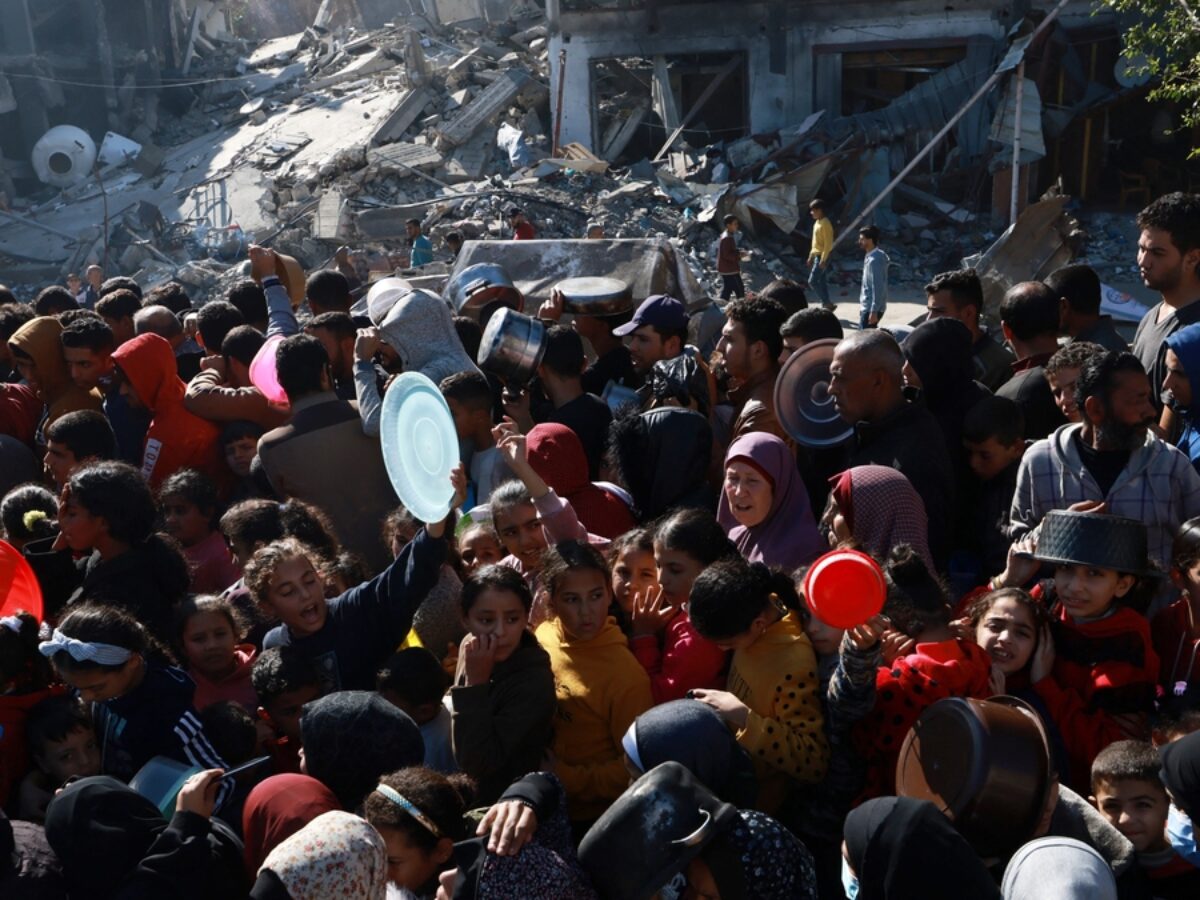
Aid entering Gaza is a fraction of what is needed. Agencies described children and families roaming the streets, unable to find food and with nowhere to go. Lines for clean water can last hours, and some have turned to collecting rainwater.
“The scarcity of aid has led to desperate struggles over water tearing at our social fabric,” Bushra Khalidi, policy lead for Oxfam, said. “The situation in Gaza is not just a catastrophe, it’s apocalyptic.”
Aid agencies described children and families roaming the streets, unable to find food and with nowhere to go. Lines for clean water can last hours, and some have turned to collecting rainwater, which in this semi-arid land is scarce, too. Supermarket shelves are empty. People arrive at bakeries before dawn, with no guarantee they’ll end up with a sack of bread before the shop runs out.
The price for a 25-kilogram (55-pound) sack of flour has skyrocketed to as high as $100 — up from about $15 before the war.
“Numbers that are really, really beyond any capacity,” Najla Shawa, a Palestinian humanitarian aid worker who recently left Gaza, said of the soaring wartime prices. Other commodities and essentials, down to the containers Gazans use to collect water, she said, have also become perilously expensive.
“Even if you have the money,” Shawa said, “the trip to get it is very dangerous and it’s really difficult and humiliating.”
Shawa said the people she has spoken to in Gaza are rationing water. “They are really trying to consume very little,” she said. “A cup a day. A couple of cups a day for the adults, giving priority to children.”
Hazem Zarifa, a 24-year-old university student sheltering in the southern city of Khan Younis, said he has walked miles searching for a little bread or some canned food.
“I have so far lost more than 10 kilograms of weight” — about 20 pounds — Zarifa said. He felt sick from hunger.
Palestinians line up for food donations in Rafah on Nov. 30. Conditions have worsened since. The U.N. secretary-general warned Thursday that the humanitarian support system in Gaza was at high risk of collapse: “We anticipate it will result in a complete breakdown of public order.
Palestinians line up for food donations in Rafah on Nov. 30. Conditions have worsened since. The U.N. secretary-general warned Thursday that the humanitarian support system in Gaza was at high risk of collapse: “We anticipate it will result in a complete breakdown of public order.”
Mohammed Abed
Representatives for several international humanitarian groups are struggling to describe the new lows after having spent much of the past two months of war ringing alarm bells about conditions on the ground in Gaza.
“Those who survived the bombardment now face imminent risk of dying of starvation and disease,” Alexandra Saieh of Save the Children said during a press briefing on Thursday.
“The lack of water and hygiene is aggravating the diseases: diarrhea, vomiting, skin allergy, lice in the children’s hair,” said Chiara Saccardi, regional head of Action Against Hunger.
During last month’s temporary pause in fighting, the World Food Programme conducted a rapid food assessment, which it released on Wednesday, concluding that the situation in Gaza was “alarming.”
In a statement issued after a visit to Gaza on Friday, WFP Deputy Executive Director Carl Skau said, “Gazans are simply not eating.”
He described “confusion at warehouses, distribution points with thousands of desperate hungry people, supermarkets with bare shelves, and overcrowded shelters with bursting bathrooms. The dull thud of bombs was the soundtrack for our day.”
Eighty-three percent of households in southern Gaza have inadequate food consumption, according to the report, with 38% suffering from “severe levels of hunger.”
In a press call with international journalists on Thursday, Oxfam’s Khalidi and others described the conditions in Gaza as “not survivable.”
“Oxfam categorically views these actions, including the use of starvation as a war weapon, massive civilian killings and collective punishment, as war crimes,” she said, referring to the Israeli-imposed siege that has cut off food, water, electricity and fuel since the war began.
On Thursday, U.N. Secretary-General António Guterres warned that the humanitarian support system in Gaza was at high risk of collapse: “We anticipate it will result in a complete breakdown of public order.”
In response, the Israeli military office that works in conjunction with the Palestinian territories said they are abiding by international law as they conduct their operations in Gaza. As it has done for weeks, Israel has blamed the humanitarian aid crisis on the United Nations Relief and Works Agency, the refugee wing dedicated to Palestinians. UNRWA has previously pushed back on that allegation.
TEL AVIV — Yocheved Lifshitz, one of the first Israeli hostages released by Hamas, took the world by surprise in late October when she shook the hand of one of her captors and uttered a single word: “Shalom” — a Hebrew salutation meaning “peace.”
Now, in an exclusive interview, Lifshitz said she believes peace can only be achieved once those who are still held captive are freed.
That includes her husband, Oded Lifshitz, who was also kidnapped from their kibbutz, Nir Oz, on Oct. 7.
“Time is running out,” Lifshitz, an 85-year-old peace activist who was released on Oct. 23, told NBC News’ Richard Engel on Monday.
“They need to get out today. Otherwise, they won’t survive,” she warned.
‘They just won’t make it’ Lifshitz described the harrowing conditions in which she was held for more than two weeks, painting a dismal picture of what the remaining hostages could be facing.
“The lack of air in the tunnels, as well as the shortage of food and medicine, could bring people to complete exhaustion,” she said. “And they just won’t make it.”
Living with the sound of constant bombardment above ground was a terror of its own, Lifshitz said.
The journey into Gaza, she added, was also horrifying: Lifshitz was driven across the border on the back of a moped, lying on her side, as “crowds on the way, just like a swarm of locusts … beat me with sticks.”
She was led through a tunnel system, she said, and later recognized friends from her kibbutz and elsewhere as they gathered in a large room that appeared to have been “prepared in advance.”
Lifshitz’ daughter, Sharone Lifschitz, who spells her surname differently from her parents, accompanied her mother for the interview. Both said they were afraid that if hostages aren’t freed before the winter holidays end, global interest in their plight — and pressure on Hamas to release them — might wane.
“Hostage families feel strongly that this week is the most crucial week,” Sharone Lifschitz said. “If it doesn’t happen this week, then it is Christmas, and then the New Year, and most of them will be dead.”
Fears for the safety of the remaining captives have mounted after the extended cease-fire — a deal that saw the release of more than 100 hostages held in Gaza and 240 Palestinian prisoners held in Israeli jails — ended on Dec. 1.
On Sunday night, Israel released the names of 20 hostages it believes are dead, heightening concerns for the more than 130 it says are still held by Hamas.
‘I don’t know if he will be able to hold on’ Lifshitz said her 82-year-old husband, Oded, was injured in Hamas’ Oct. 7 ambush and is suffering from high blood pressure and lung disease. She fears he and other hostages with health conditions could die soon if they are not released.
“Oded suffered highs and lows in blood pressure, and he has a pre-existing lung illness, and I don’t know if he will be able to hold on over there,” she said. “The conditions over there, with no fresh air and after such a long period of time — I don’t know if there is enough oxygen over there for people with lung disease.”
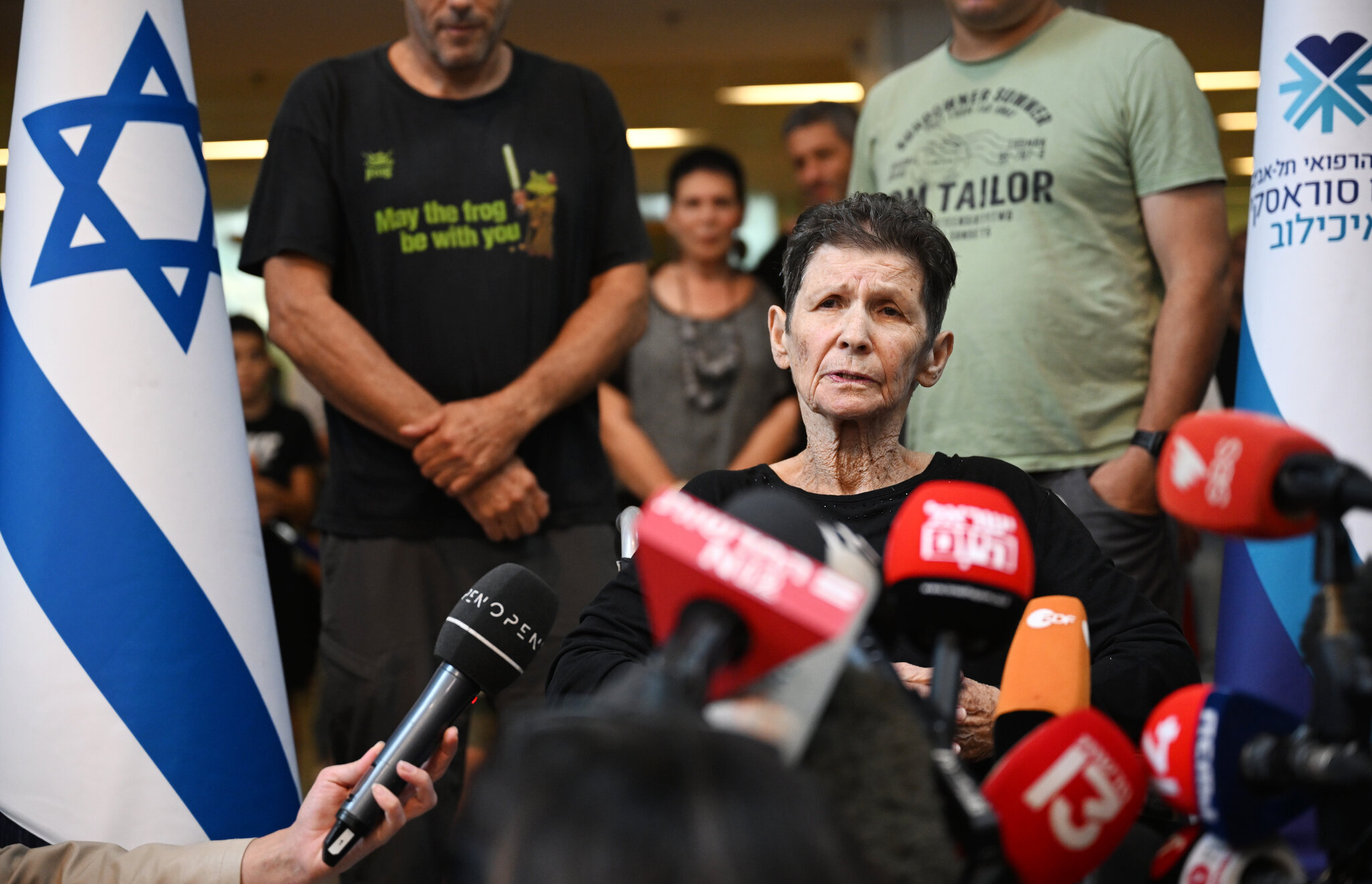
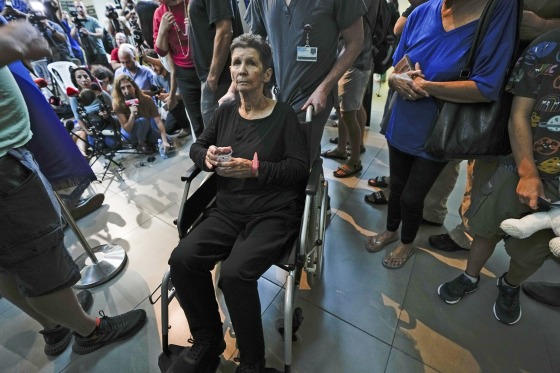
Yocheved Lifshitz, 85, speaks to members of the media in Tel Aviv on Oct. 24, a day after being released by Hamas militants.
In a few instances, Lifshitz referred to her husband, a journalist and fellow peace activist, in the past tense, then caught herself.
“He was a brilliant journalist, very much appreciated,” she said. “He is still — I don’t want to say ‘was’ in the past tense.”
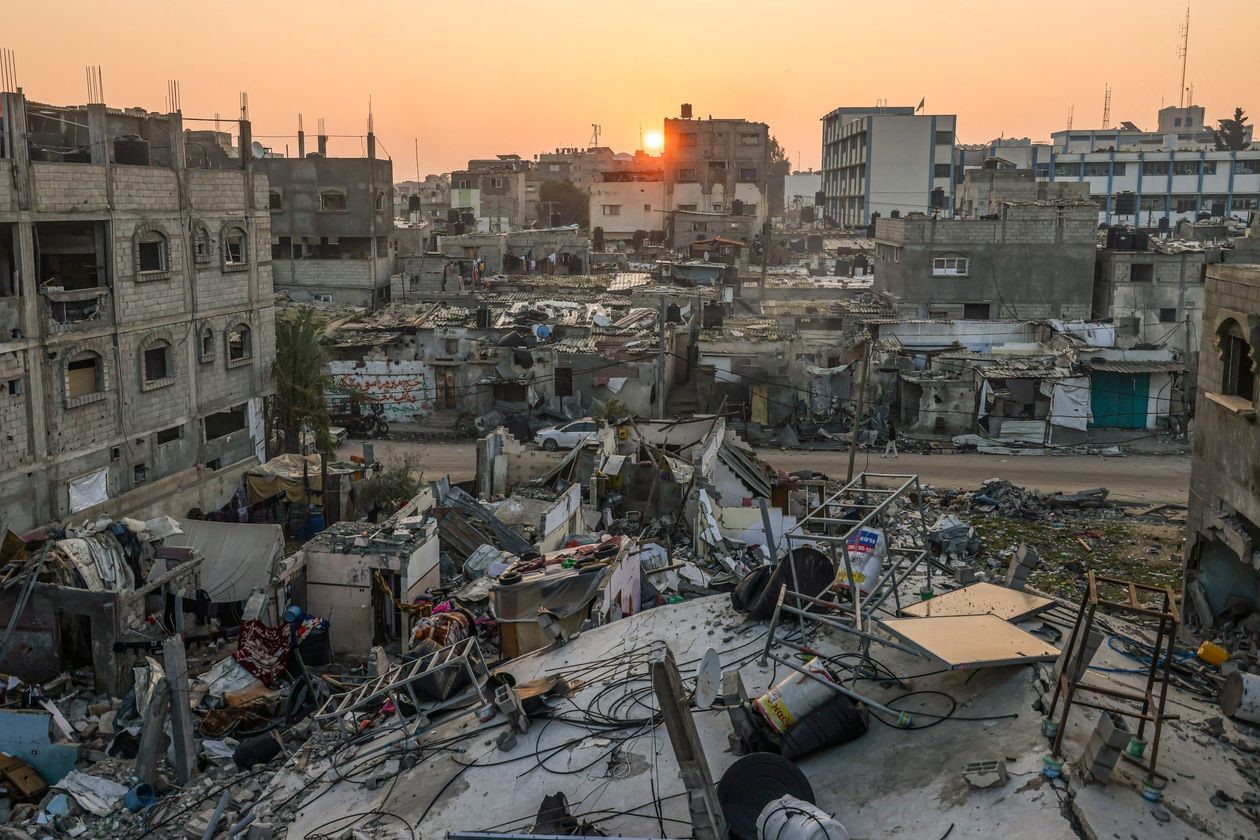
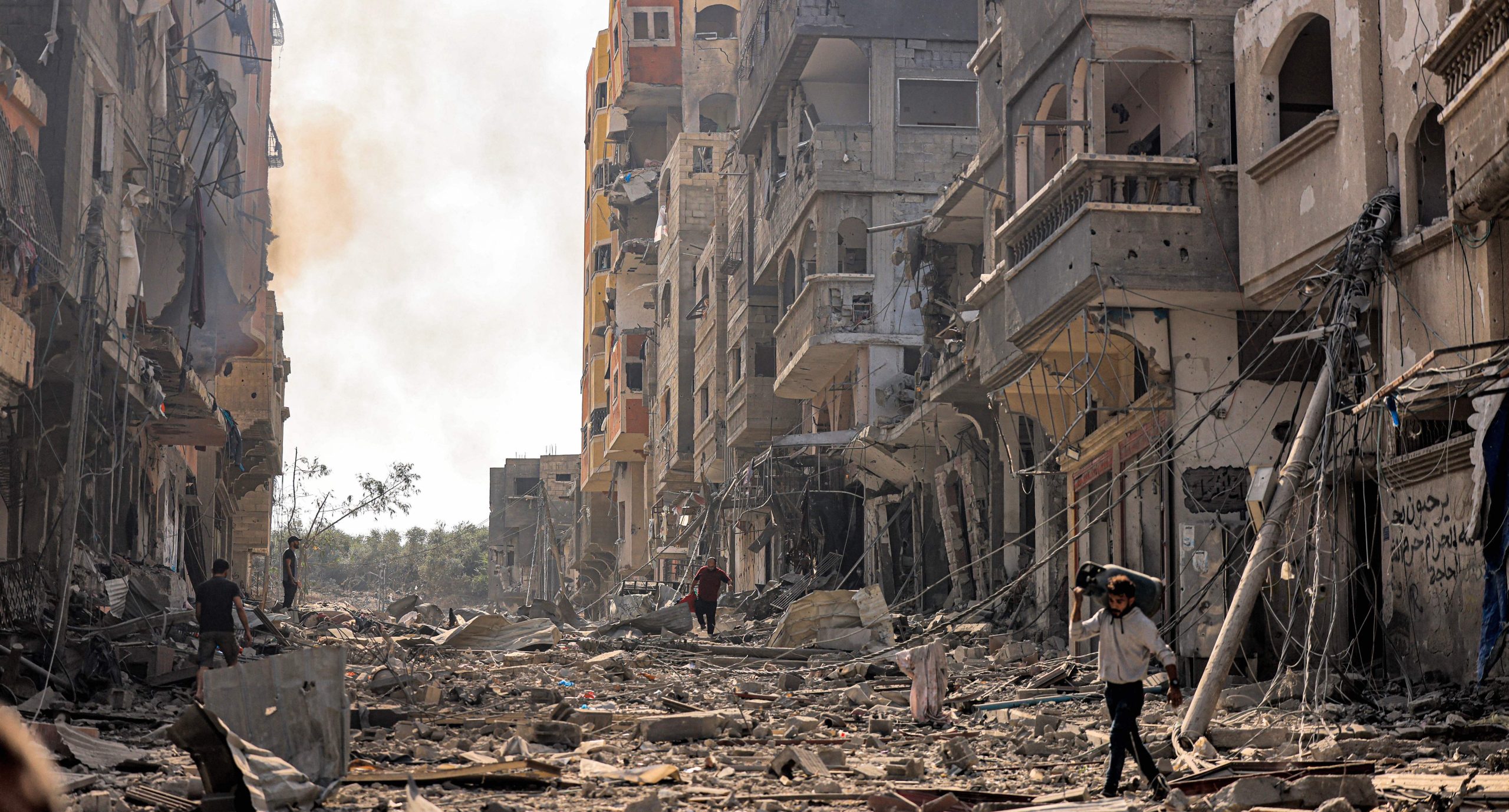
Gaza is in ruins, with Israeli forces laying siege to the entire strip and leveling swaths of the enclave. An estimated 80% of its population of 2.2 million has been displaced — the majority now trapped in the south, increasingly pressed toward the Rafah border with Egypt.
Palestinians in Gaza say life has become a cruel choice between death and displacement. Yet an urgent question persists: What will Gaza’s future be after this war ends?
Several experts told NBC News that options being discussed by diplomats and officials range from workaround solutions, which ignore long-standing failures, to the catastrophic.
In one scenario, the Palestinian Authority, which runs the occupied West Bank and is increasingly unpopular, would reassume control of the territory. In another, Arab Gulf countries would fund efforts to rebuild Gaza and an international peacekeeping force would retain oversight. In a third, Palestinians would be displaced to Egypt or other countries — a path raised by Israeli lawmakers even though Prime Minister Benjamin Netanyahu has said the war in Gaza is aimed at crushing Hamas, not expelling Palestinians.
In the shorter term, it is unclear whether the estimated 1.9 million Palestinians who fled to southern parts of Gaza will ever be able to return to learn if their homes are now rubble. Humanitarian relief groups will probably be the only entities providing basic necessities in a decimated landscape that will require decades of rebuilding.
A woman hangs laundry to dry in a refugee camp in Rafah, set up by Palestinians who had fled Khan Younis for safer areas further south.
“They will live in tents, that’s how they will be,” director of conflict resolution at the Middle East Institute, a nonpartisan think tank based in Washington, D.C. “There will be no water, no electricity, no health care delivery. Gaza becomes a tent city.”
Randa Slim,
Regional experts are wary of forecasting Gaza’s future, given the volatile situation in the West Bank and East Jerusalem, making the exercise all the more unpredictable.
Exploring the Tech-Savvy Wonders The delineation between digital and physical continues to blur, weaving a fabric of reality that resonates with the beats of progress. Within this exciting nexus, entrepreneurs and tech aficionados find a fertile ground to cultivate, explore, and thrive. As we navigate through the myriad of gadget-driven narratives, there are key trends and ground-breaking gadgets that stand poised to redefine our daily existence.
From AI-powered personal assistants to wearable tech that tunes into our biological rhythms, the future seems to have unpacked itself right into our living rooms. Join us as we delve into the tech-savvy wonders of 2023 and glimpse the future of gadgetry.
Wearables: Not Just Watches, But Windows to Wellness The era of wearables merely displaying time and tracking steps feels almost prehistoric. Today, wearable technology offers insights deep into our physiological and psychological states. Advanced biometric sensors track parameters far beyond heart rates; they gauge stress levels, monitor hydration, and even predict potential health disruptions. Wearables in 2023 also seamlessly integrate with our smart homes, adjusting environments based on our mood or energy levels, offering a truly interconnected living experience. Virtual Reality (VR) and Augmented Reality (AR) wearables have taken entertainment and education to new dimensions. They offer immersive experiences, from “walking” through historical events to attending virtual concerts that feel palpably real. Moreover, with the integration of haptic feedback, the line between the virtual and real world gets delightfully, and sometimes eerily, blurred.But it’s not just about personal wellness or entertainment. Wearable tech also plays a pivotal role in professional settings. From enhancing hands-free operations in industries to offering real-time data overlays for technicians, the applications seem limitless and profoundly transformative.
Smart Homes: Beyond Automation to Anticipation If 2023 could be summarized in the gadget space, it would be the year where our homes started truly “understanding” us. Gone are the days of generic automation. With advancements in AI, homes now anticipate needs. Your coffee machine knows when you’ve had a rough night and adjusts the brew strength accordingly. Lighting not just detects presence but mood, optimizing brightness and hue to either energize or soothe.
Lastly, with an increasing focus on sustainability, gadgets are now designed to be more energy-efficient than ever. Solar-powered outdoor tech, energy-harvesting tiles, and smart meters ensure that embracing technology doesn’t come at the planet’s expense. In 2023, to be tech-savvy also means being eco-conscious.
The Eco-Tech Revolution: A Sustainable Future In the midst of the technological whirlwind of 2023, a significant subheading in the realm of gadgetry is the growing emphasis on sustainability and eco-consciousness. This year, more than ever, the gadgets we use are not just about convenience and functionality but also about minimizing our environmental footprint.
The Eco-Tech Revolution encompasses a wide range of innovations, from eco-friendly materials used in gadget construction to energy-efficient design principles. In this section, we’ll explore how gadget manufacturers are embracing sustainability, from the reduction of electronic waste to the promotion of renewable energy sources.
Additionally, we’ll delve into the role of gadgets in fostering a sustainable lifestyle. Smart home devices that optimize energy consumption, water-saving technologies, and eco-awareness apps are all contributing to a more environmentally responsible way of living. As we navigate the world of tech-savvy wonders in 2023, it’s imperative to recognize the pivotal role of eco-tech in shaping a greener and more sustainable future.
Exploring the Tech-Savvy Wonders The delineation between digital and physical continues to blur, weaving a fabric of reality that resonates with the beats of progress. Within this exciting nexus, entrepreneurs and tech aficionados find a fertile ground to cultivate, explore, and thrive. As we navigate through the myriad of gadget-driven narratives, there are key trends and ground-breaking gadgets that stand poised to redefine our daily existence.
From AI-powered personal assistants to wearable tech that tunes into our biological rhythms, the future seems to have unpacked itself right into our living rooms. Join us as we delve into the tech-savvy wonders of 2023 and glimpse the future of gadgetry.
Wearables: Not Just Watches, But Windows to Wellness The era of wearables merely displaying time and tracking steps feels almost prehistoric. Today, wearable technology offers insights deep into our physiological and psychological states. Advanced biometric sensors track parameters far beyond heart rates; they gauge stress levels, monitor hydration, and even predict potential health disruptions. Wearables in 2023 also seamlessly integrate with our smart homes, adjusting environments based on our mood or energy levels, offering a truly interconnected living experience. Virtual Reality (VR) and Augmented Reality (AR) wearables have taken entertainment and education to new dimensions. They offer immersive experiences, from “walking” through historical events to attending virtual concerts that feel palpably real. Moreover, with the integration of haptic feedback, the line between the virtual and real world gets delightfully, and sometimes eerily, blurred.But it’s not just about personal wellness or entertainment. Wearable tech also plays a pivotal role in professional settings. From enhancing hands-free operations in industries to offering real-time data overlays for technicians, the applications seem limitless and profoundly transformative.
Smart Homes: Beyond Automation to Anticipation If 2023 could be summarized in the gadget space, it would be the year where our homes started truly “understanding” us. Gone are the days of generic automation. With advancements in AI, homes now anticipate needs. Your coffee machine knows when you’ve had a rough night and adjusts the brew strength accordingly. Lighting not just detects presence but mood, optimizing brightness and hue to either energize or soothe.
Lastly, with an increasing focus on sustainability, gadgets are now designed to be more energy-efficient than ever. Solar-powered outdoor tech, energy-harvesting tiles, and smart meters ensure that embracing technology doesn’t come at the planet’s expense. In 2023, to be tech-savvy also means being eco-conscious.
The Eco-Tech Revolution: A Sustainable Future In the midst of the technological whirlwind of 2023, a significant subheading in the realm of gadgetry is the growing emphasis on sustainability and eco-consciousness. This year, more than ever, the gadgets we use are not just about convenience and functionality but also about minimizing our environmental footprint.
The Eco-Tech Revolution encompasses a wide range of innovations, from eco-friendly materials used in gadget construction to energy-efficient design principles. In this section, we’ll explore how gadget manufacturers are embracing sustainability, from the reduction of electronic waste to the promotion of renewable energy sources.
Additionally, we’ll delve into the role of gadgets in fostering a sustainable lifestyle. Smart home devices that optimize energy consumption, water-saving technologies, and eco-awareness apps are all contributing to a more environmentally responsible way of living. As we navigate the world of tech-savvy wonders in 2023, it’s imperative to recognize the pivotal role of eco-tech in shaping a greener and more sustainable future.
Exploring the Tech-Savvy Wonders The delineation between digital and physical continues to blur, weaving a fabric of reality that resonates with the beats of progress. Within this exciting nexus, entrepreneurs and tech aficionados find a fertile ground to cultivate, explore, and thrive. As we navigate through the myriad of gadget-driven narratives, there are key trends and ground-breaking gadgets that stand poised to redefine our daily existence.
From AI-powered personal assistants to wearable tech that tunes into our biological rhythms, the future seems to have unpacked itself right into our living rooms. Join us as we delve into the tech-savvy wonders of 2023 and glimpse the future of gadgetry.
Wearables: Not Just Watches, But Windows to Wellness The era of wearables merely displaying time and tracking steps feels almost prehistoric. Today, wearable technology offers insights deep into our physiological and psychological states. Advanced biometric sensors track parameters far beyond heart rates; they gauge stress levels, monitor hydration, and even predict potential health disruptions. Wearables in 2023 also seamlessly integrate with our smart homes, adjusting environments based on our mood or energy levels, offering a truly interconnected living experience. Virtual Reality (VR) and Augmented Reality (AR) wearables have taken entertainment and education to new dimensions. They offer immersive experiences, from “walking” through historical events to attending virtual concerts that feel palpably real. Moreover, with the integration of haptic feedback, the line between the virtual and real world gets delightfully, and sometimes eerily, blurred.But it’s not just about personal wellness or entertainment. Wearable tech also plays a pivotal role in professional settings. From enhancing hands-free operations in industries to offering real-time data overlays for technicians, the applications seem limitless and profoundly transformative.
Smart Homes: Beyond Automation to Anticipation If 2023 could be summarized in the gadget space, it would be the year where our homes started truly “understanding” us. Gone are the days of generic automation. With advancements in AI, homes now anticipate needs. Your coffee machine knows when you’ve had a rough night and adjusts the brew strength accordingly. Lighting not just detects presence but mood, optimizing brightness and hue to either energize or soothe.
Lastly, with an increasing focus on sustainability, gadgets are now designed to be more energy-efficient than ever. Solar-powered outdoor tech, energy-harvesting tiles, and smart meters ensure that embracing technology doesn’t come at the planet’s expense. In 2023, to be tech-savvy also means being eco-conscious.
The Eco-Tech Revolution: A Sustainable Future In the midst of the technological whirlwind of 2023, a significant subheading in the realm of gadgetry is the growing emphasis on sustainability and eco-consciousness. This year, more than ever, the gadgets we use are not just about convenience and functionality but also about minimizing our environmental footprint.
The Eco-Tech Revolution encompasses a wide range of innovations, from eco-friendly materials used in gadget construction to energy-efficient design principles. In this section, we’ll explore how gadget manufacturers are embracing sustainability, from the reduction of electronic waste to the promotion of renewable energy sources.
Additionally, we’ll delve into the role of gadgets in fostering a sustainable lifestyle. Smart home devices that optimize energy consumption, water-saving technologies, and eco-awareness apps are all contributing to a more environmentally responsible way of living. As we navigate the world of tech-savvy wonders in 2023, it’s imperative to recognize the pivotal role of eco-tech in shaping a greener and more sustainable future.
As the timeline of technology perpetually accelerates, 2023 emerges as a testament to human creativity and ingenuity. The realm of gadgets is no longer restricted to mere utility; it’s about amplifying human potential and redefining boundaries. With each passing day, these handheld marvels become an even more integrated part of our daily lives, intertwining with our routines, enhancing our capabilities, and reshaping our perceptions of reality.
Exploring the Tech-Savvy Wonders The delineation between digital and physical continues to blur, weaving a fabric of reality that resonates with the beats of progress. Within this exciting nexus, entrepreneurs and tech aficionados find a fertile ground to cultivate, explore, and thrive. As we navigate through the myriad of gadget-driven narratives, there are key trends and ground-breaking gadgets that stand poised to redefine our daily existence.
From AI-powered personal assistants to wearable tech that tunes into our biological rhythms, the future seems to have unpacked itself right into our living rooms. Join us as we delve into the tech-savvy wonders of 2023 and glimpse the future of gadgetry.
Wearables: Not Just Watches, But Windows to Wellness The era of wearables merely displaying time and tracking steps feels almost prehistoric. Today, wearable technology offers insights deep into our physiological and psychological states. Advanced biometric sensors track parameters far beyond heart rates; they gauge stress levels, monitor hydration, and even predict potential health disruptions. Wearables in 2023 also seamlessly integrate with our smart homes, adjusting environments based on our mood or energy levels, offering a truly interconnected living experience. Virtual Reality (VR) and Augmented Reality (AR) wearables have taken entertainment and education to new dimensions. They offer immersive experiences, from “walking” through historical events to attending virtual concerts that feel palpably real. Moreover, with the integration of haptic feedback, the line between the virtual and real world gets delightfully, and sometimes eerily, blurred.But it’s not just about personal wellness or entertainment. Wearable tech also plays a pivotal role in professional settings. From enhancing hands-free operations in industries to offering real-time data overlays for technicians, the applications seem limitless and profoundly transformative.